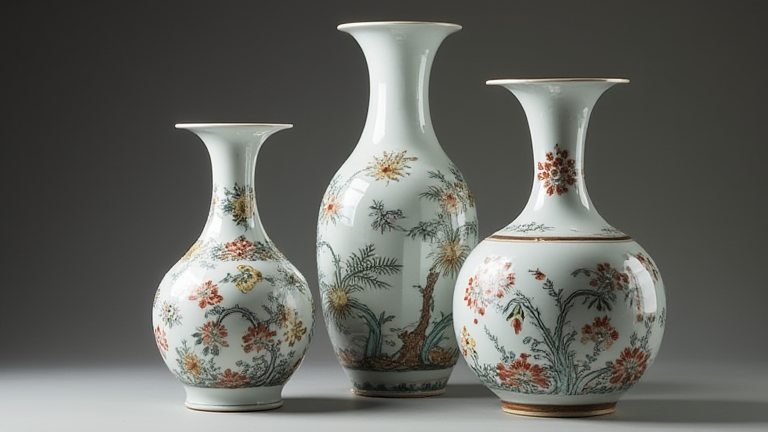
TL;DR: Investing in porcelain vases is a high-margin, asset-backed business if you focus on provenance, condition, and emerging Asian collectors. The key is buying wholesale from estate auctions or defunct museum inventories, then selling via curated online marketplaces and private client networks—not retail galleries.
Market Analysis: The Silent Appreciation Asset
The global antique porcelain market is projected to grow at 4.2% CAGR through 2030, driven by Chinese and Southeast Asian wealth repatriation. Unlike contemporary art, porcelain vases have a finite supply—no new Ming or Qing pieces are being made. The top 1% of vases (imperial kilns, rare glaze defects, documented imperial reign marks) have outperformed the S&P 500 over the last 20 years, with average annual returns of 7.8% for verified pieces. However, the middle market (late Qing export ware, Japanese Imari) is flat, so the strategy must target scarcity, not volume.
If you want to dig deeper, check out our guide on Porcelain Vase Health Risks: Lead, Heavy Metals & Safety Tip.
Strategy Insights: Buy Provenance, Not Beauty
Successful investors follow a three-tier filter: 1) Provenance chain—vases with an unbroken auction history or an old European aristocratic label command 40-60% premiums. 2) Condition grading—hairline cracks reduce value by 70%, but a professional restoration on a foot rim is acceptable if disclosed. 3) Market timing—buy in Q1 (post-holiday auction lulls) and sell in Q3 (ahead of Hong Kong autumn sales). Do not rely on retail appraisals; use Sotheby’s or Christie’s specialist valuations, which cost $200–$500 but prevent catastrophic overpay.
Case Studies: Two Paths to Profit
Case 1: The Estate Flip. A dealer in London purchased a pair of Qianlong famille-rose vases at a regional UK auction for £18,000, mislabeled as “19th century.” After cleaning and a £2,500 authentication fee, they proved to be genuine 18th-century imperial pieces. Sold via a private treaty to a Hong Kong collector for £145,000—a 700% return in 11 months. Key lesson: train your eye on reign marks and enamel layering, not just aesthetics.
Case 2: The Digital Arbitrage. A US investor used online Japanese auction platforms (Yahoo! Japan) to source Satsuma vases for $300–$800 each, then resold them to American interior designers via 1stDibs for $2,500–$4,000. Volume was low (12 pieces/year) but net margins were 62%, proving niche sourcing beats broad inventory. The risk is shipping damage—always require double-boxing and insurance.
Operational Risks & Mitigation
Fakes are the biggest threat. Always use UV light to check for repainting, and verify kiln grit on unglazed bases. Also, customs duties on Chinese porcelain can be 8-12%—factor that into your pricing. For storage, use acid-free tissue and padded crates; a single chip can erase your profit.
FAQ
Q: What is the minimum capital needed to start investing in porcelain vases?
A: You can start with $5,000–$10,000 by buying single late-Qing vases at regional auctions, but a serious portfolio that yields consistent profits usually requires $50,000+ to avoid liquidity traps.
Q: Which porcelain vase types are the best for resale value?
A: Imperial Qing (Kangxi, Yongzheng, Qianlong) with cobalt blue or famille-rose enamels, plus rare Ru or Guan wares from the Song dynasty. Avoid modern reproductions and unmarked 20th-century studio pieces.
Q: How do I verify authenticity without spending thousands on experts?
A: Use three low-cost checks:
Leave a Reply