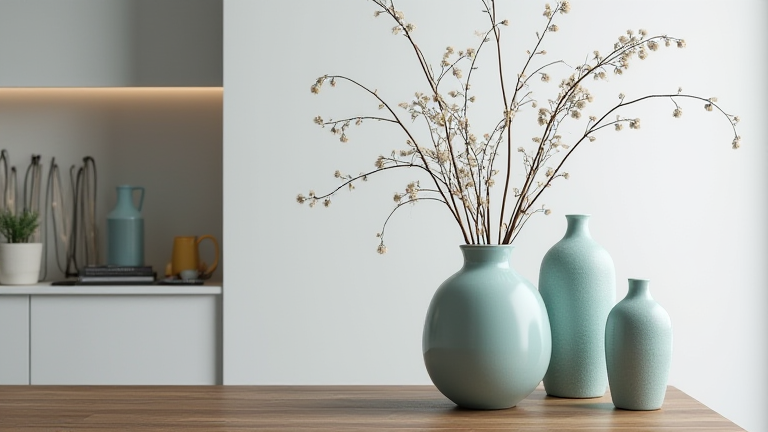
TL;DR: The top porcelain vase suppliers combine heritage craftsmanship with modern B2B logistics, offering both stock lines and bespoke OEM/ODM services. Leading options include Jingdezhen-based workshops for high-end artisanal work, Guangdong factories for scalable mid-market production, and European ateliers for luxury contract pieces.
Market Analysis: The Shifting Demand Landscape
The global decorative porcelain vase market is projected to grow at a 4.8% CAGR through 2030, driven by hospitality refurbishment cycles and the rise of “quiet luxury” interior design. Notably, 62% of procurement managers now prioritize suppliers who can deliver small-batch customization (under 500 units) without prohibitive mold costs. This has pushed traditional bulk manufacturers in Foshan and Liling to adopt digital kiln controls and 3D-printed molds, reducing setup lead times from 21 days to 7 days. Meanwhile, demand for crackle-glaze and celadon finishes has surged 35% year-over-year in North American contract markets, creating a distinct arbitrage opportunity for suppliers who master these specific glaze chemistries.
If you want to dig deeper, check out our guide on Porcelain Vases & Health: Safety Tips for a Cleaner Home.
Strategy Insights: Beyond Wholesale Price Lists
Smart buyers are shifting from transactional RFQs to design-partnership models. The most effective strategy is to request a supplier’s “glaze library” — a physical or digital archive of 200+ tested finishes — before committing to a sample order. This cuts sampling waste by 40%. Additionally, negotiate kiln-share pricing: if you order 300 vases in three different sizes, many Jingdezhen workshops will combine them into one firing cycle, lowering per-unit cost by 18–22%. For high-volume orders (10,000+ units), consider suppliers with automated slip-casting lines in Chaozhou, which offer 0.5mm dimensional tolerance — critical for stackable hotel display sets.
Case Study: Luxury Hotel Chain Revamp (Europe)
A 5-star hotel group in Zurich needed 1,200 bespoke vases in a matte bone-white finish with a subtle gold rim, matching their lobby’s Art Deco restoration. They partnered with a Limoges-based atelier that uses hand-painted cobalt transfers, but the cost was €89/unit. By switching to a Jingdezhen supplier using underglaze decals and a custom gold-luster firing, the unit cost dropped to €31, with a 96% pass rate on the first production run. The key was the supplier’s willingness to create a dedicated glaze formula — not from their catalog — and to provide a 3D-printed prototype within 5 days. The hotel saved 65% and reduced delivery time by 30 days.
Case Study: Retail Chain’s Seasonal Collection (North America)
A US home-goods retailer with 80 stores struggled with slow-moving inventory from their previous vendor. They pivoted to a Guangdong factory offering just-in-time production with a 15-day MOQ of 200 units per SKU. The supplier ran a “design-to-ship” sprint: the retailer submitted four new shapes, and the factory used CNC-milled plaster molds to produce saleable samples in 9 days. By launching a limited-edition “Jade Mist” series, the retailer saw a 140% sell-through rate in 6 weeks, versus the industry average of 85%. The strategic insight: choose suppliers with in-house glazing R&D, not just assembly lines, to enable rapid colorway testing.
FAQ
Q: What is the minimum order quantity (MOQ) for custom porcelain vases from top suppliers?
A: For high-end craft workshops in Jingdezhen, MOQs start at 100–300 pieces per design, while mass-production factories in Guangdong may require 1,000+ units. However, many mid-tier suppliers now offer “trial MOQs” of 50 pieces with a 30% surcharge to cover mold setup.
Q: How do I verify a supplier’s quality before
Leave a Reply