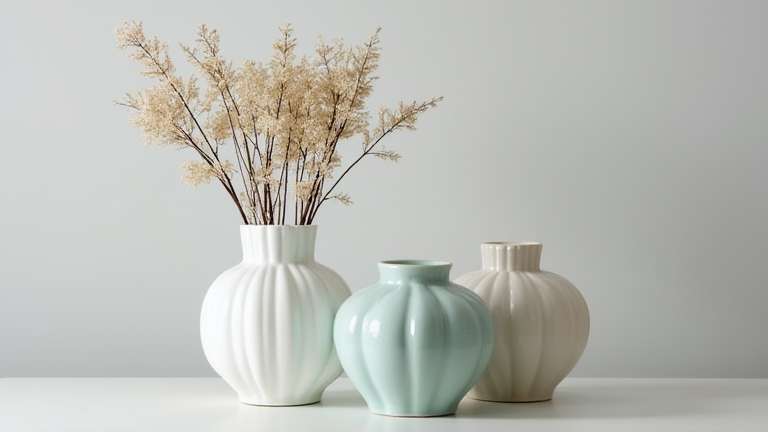
TL;DR: Timeless porcelain vases are the ultimate chameleon of home decor—they bridge minimalist modernity and old-world charm without uttering a word. By choosing a piece that speaks to your travel memories or cultural heritage, you instantly elevate any room from “furnished” to “curated.”
The Art of Stillness: Why Porcelain Belongs in Your Living Space
In an era of fast furniture and disposable trends, porcelain vases stand as a quiet rebellion. Unlike plastic or mass-produced ceramic, each porcelain vessel carries a story of fire, clay, and patience—a craft perfected over centuries in Jingdezhen, Delft, or Sèvres. When you place one on a console table or a bare shelf, you’re not just adding a container for flowers; you’re inviting a piece of global culture into your daily rhythm. Think of the Japanese concept of *wabi-sabi*—the beauty of imperfection—or the Moroccan tradition of hand-painted zellige patterns. A porcelain vase anchors a room with its weight and glaze, giving your eyes a resting place amid busy textures.
If you want to dig deeper, check out our guide on Are Porcelain Vases Safe? Health Facts on Lead & Glazes.
Travel Souvenirs That Outlast Your Suitcase
Instead of buying another fridge magnet, consider a small porcelain vase from your next trip. A cobalt-blue ginger jar from Portugal, a celadon bottle from Korea, or a rustic earthenware vase from a Tuscan market—each becomes a tactile memory. When you’re home, you can fill it with seasonal branches, dried lavender, or simply let it stand empty as a sculpture. The beauty is in its versatility: pair it with a stack of coffee-table books about the region you visited, and you’ve created a vignette that tells a story without a single caption. For personal growth, the act of choosing a vessel that must survive a flight home teaches you to prioritize what truly matters—beauty, utility, and memory.
Styling Rules: Less Is More, But Texture Is Everything
To master the porcelain vase look, ignore the urge to overcrowd. One statement vase on a mantelpiece, flanked by two smaller ones of varying heights, creates a rhythm. Mix glossy and matte finishes to add depth—a white crackle-glaze vase next to a matte black one offers quiet drama. For a food-and-culture twist, use a vase as a stunning olive oil dispenser on a dinner table (ensure it’s food-safe), or as a utensil holder in a rustic kitchen. The secret is to let the vase breathe: never fill it with overly busy flower arrangements. A single stem of quince blossom or a sprig of eucalyptus respects the vessel’s own architecture. And if you’re short on space, hang a small porcelain vase from a wall hook—yes, they come with loops—turning a vertical blank wall into a gallery of tiny ceramics.
Care and Longevity: A Ritual of Respect
Porcelain is durable but not indestructible. Dust it with a soft, dry cloth; avoid harsh chemicals. If you use it for fresh flowers, change the water daily to prevent staining. Over time, a fine crackle pattern (called *craquelure*) may appear—this isn’t damage; it’s a signature of age. Embrace it as you would a graceful wrinkle. By caring for your vases, you practice a form of mindfulness, slowing down to appreciate objects that will outlive you. That’s the real luxury: not trend-driven consumption, but a connection to permanence in a throwaway world.
FAQ
Q: Can I use a porcelain vase for everyday fresh flowers, or is it just for display?
A: Absolutely use it for fresh flowers—just ensure it has a water-tight glaze inside, and change the water every two days to avoid mineral buildup or mold. A narrow-neck vase is ideal for one or two stems; a wide opening works for larger bouquets.
Q: How do I choose the right size porcelain vase for my shelf or table?
A: A general rule:
Leave a Reply