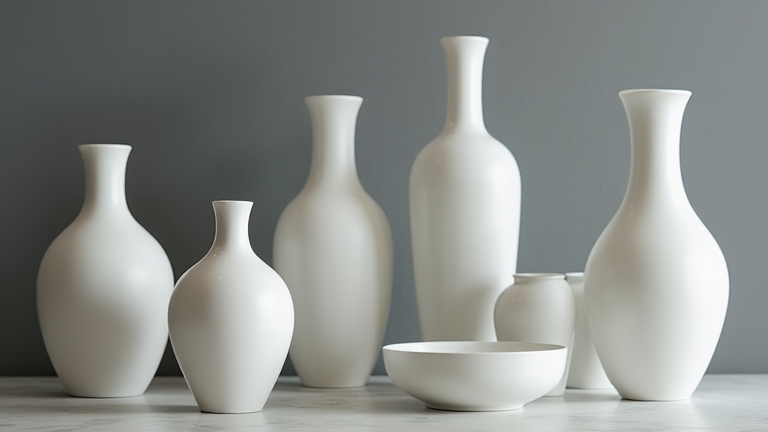
TL;DR: Modern porcelain vase manufacturing is driven by additive 3D printing, AI-assisted glaze optimization, and robotic precision handling. These innovations enhance design complexity, reduce material waste, and ensure consistent high-quality finishes for luxury market products.
Revolutionizing Clay: The Digital Frontier
The porcelain industry, traditionally rooted in centuries-old artisanal techniques, is undergoing a significant transformation. As consumer demand for unique, customized, and sustainably produced ceramics grows, manufacturers are adopting advanced technologies to meet these needs. The following five innovations represent the cutting edge of modern porcelain vase production, reshaping how these elegant items are designed, formed, and finished.
If you want to dig deeper, check out our guide on How to Make Porcelain Vases: A Step-by-Step DIY Tutorial.
1. Additive 3D Printing for Complex Geometries
Traditional slip casting limits the geometric complexity of porcelain vases. Digital Material Extrusion, specifically 3D printing, allows for the creation of intricate lattice structures and organic forms impossible with molds. Modern printers use specialized porcelain pastes with precise rheological properties. This technology enables rapid prototyping, reducing development cycles from weeks to days. Manufacturers can now produce limited-edition artistic pieces with high structural integrity, catering to the niche luxury market without the high cost of custom mold fabrication.
2. AI-Driven Glaze Formulation
Achieving perfect glaze consistency is critical for the aesthetic appeal of porcelain vases. Artificial Intelligence algorithms now analyze thousands of historical batch records to predict glaze behavior under varying kiln conditions. By optimizing raw material ratios, AI reduces trial-and-error testing, lowering material waste by up to 30%. This precision ensures that every vase in a production batch exhibits identical color depth and texture, meeting the stringent quality standards expected by high-end retailers.
3. Robotic Handling and Precision Loading
Porcelain is fragile, especially during the bisque firing stage. Automated robotic arms equipped with soft-grip end-effectors handle vases with millimeter-level accuracy. These systems integrate with vision-based quality control cameras to detect micro-cracks before loading into the kiln. This automation minimizes breakage rates, which have historically been a major cost driver in ceramic manufacturing. The integration of robotics ensures that delicate vase shapes are moved without stress fractures, preserving structural integrity throughout the production line.
4. Energy-Efficient Electric Kilns with IoT Monitoring
Thermal management is a significant operational expense in porcelain firing. New-generation electric kilns utilize Internet of Things sensors to monitor temperature gradients in real-time. Advanced algorithms adjust heating elements dynamically to maintain uniform temperatures across the chamber. This precision prevents warping and ensures consistent vitrification, resulting in denser, more durable porcelain vases. Additionally, these systems optimize energy consumption by reducing idle heat loss, lowering the carbon footprint of each production cycle significantly.
5. Sustainable Recycled Porcelain Powders
Sustainability is a key focus for modern consumers. Innovations in material recycling allow manufacturers to reclaim broken porcelain pieces from production lines. These shards are ground into fine powders and blended with virgin kaolin to create new batches. This closed-loop system reduces raw material extraction and landfill waste. The resulting porcelain vases maintain high white purity and translucency, proving that sustainable practices do not compromise product quality or aesthetic value.
Industry Impact
These technologies collectively enhance efficiency, reduce costs, and open new design possibilities. Companies adopting these innovations gain a competitive edge in both mass-market and luxury segments. The shift towards digital manufacturing also allows for greater personalization, enabling brands to offer bespoke vase designs at scale.
FAQ
Q: Does 3D printing affect the strength of porcelain vases?
A: No, modern 3D printing techniques use high-density porcelain pastes and optimized layer bonding, resulting in vases that meet or exceed the structural strength of traditionally cast pieces.
Q: Are AI-formulated glazes safe for food contact?
A: Yes, AI optimization focuses on precise chemical compositions that comply with international safety standards, ensuring all
Leave a Reply