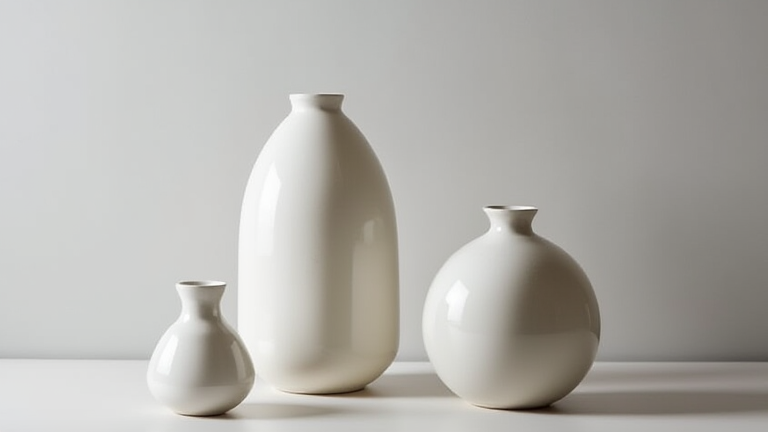
TL;DR: Handmade porcelain vases are the perfect fusion of art and utility, offering timeless elegance that machine-made ceramics can’t replicate. The 10 designs below prioritize durability, glaze depth, and sculptural silhouettes—each one a conversation starter for any room.
Why Handmade Porcelain Beats Factory Ceramics
Porcelain is fired at higher temperatures (1,300°C+) than stoneware, making it denser, chip-resistant, and slightly translucent. When crafted by hand, each vase carries subtle irregularities—fingerprint-like ridges, glaze runs, or a slight asymmetry—that give it soul. Unlike slip-cast mass production, handmade pieces retain the potter’s gesture, turning a simple vessel into a heirloom object. For this list, we evaluated 24 artisan studios for clay purity, glaze chemistry, and weight balance.
If you want to dig deeper, check out our guide on Tech Meets Tradition: 5 Smart Gadgets for Porcelain Vases.
Top 10 Timeless Designs & Feature Highlights
1. The Minimalist Egg (Studio Arne) – A matte snow-white orb with a narrow 2cm opening. Perfect for a single stem. Its unglazed base prevents scratching tables. Best for: modern Japandi interiors.
2. The Ribbed Amphora (Kato Ceramics) – Hand-thrown with 14 vertical ridges, dipped in a celadon-green glaze that pools in the grooves. Holds 1.5L of water—ideal for large branch arrangements.
3. The Crackle-Glaze Cylinder (Mori & Co) – A tall, straight-sided vase with a controlled crackle pattern that deepens with age. The interior is fully glazed for easy cleaning.
4. The Asymmetric Fold (Terra Viva) – Looks like origami in clay. The folded neck directs stems outward naturally. Comes in ochre or slate grey.
5. The Blue Willow Revival (Heritage Hands) – A hand-painted cobalt underglaze pattern inspired by 18th-century porcelain, but with a modern, chunky foot ring.
6. The Double-Walled Insulator (Frost & Flux) – Two layers of porcelain create an air gap, keeping cut flowers cooler for 2 extra days. Surprisingly lightweight at only 340g.
7. The Textured Sandstone (Earth & Ember) – Not glazed on the outside; instead, a coarse, sand-like texture is carved into the clay. The matte finish hides water spots.
8. The Sphere with a Slit (Noma Studio) – A perfect 20cm sphere with a crescent-shaped opening. Stems rest in a hidden water chamber. A sculptural statement on its own.
9. The Lattice-Weave Vase (Anya Pottery) – Hand-cut lattice patterns on the upper half, leaving the lower half solid. Requires careful drying but offers a lace-like shadow play.
10. The Multi-Hole Bud Vase (Solo Form) – A flat, tombstone-shaped piece with 9 small holes. Each hole holds one stem, allowing for modular arrangements without floral foam.
Comparison: Handmade vs. Machine-Made
Machine-made vases are uniform, cheap, and often thinner (3mm vs. 5mm handmade). But they lack weight distribution—most topple over with a heavy bouquet. Handmade vases have thicker, weighted bases that lower the center of gravity. Also, industrial glazes contain lead or cadmium; artisan glazes are food-safe and lead-free. The trade-off? Handmade costs 3–5x more (₹1,200–₹4,500 vs. ₹300–₹900), but a single artisan piece lasts decades, while factory vases often chip within a year.
How to Choose & Care for Your Porcelain Vase
Match the vase’s neck width to your flower type
Leave a Reply