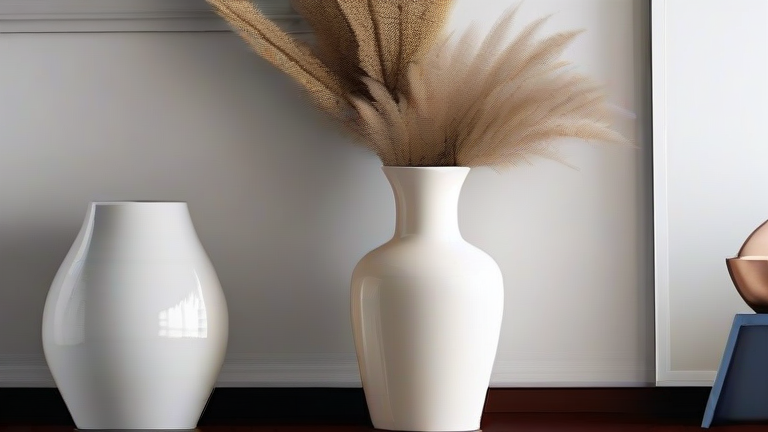
TL;DR: To elevate your home with porcelain vases, treat them as sculptural anchors—not just flower holders—by pairing their glaze with texture and negative space. Style them in odd-numbered clusters, use asymmetry inspired by Japanese wabi-sabi, and let the vase’s material story (from Jingdezhen to Delft) dictate the room’s mood.
The Quiet Power of Porcelain: More Than a Vessel
In an era of disposable décor, a porcelain vase is a quiet rebellion. It carries centuries of craft—from the cobalt blues of Ming dynasty kilns to the delicate floral reliefs of 18th-century European manufactories. But too often, these treasures are relegated to dusty shelves or filled with sad, wilting grocery-store tulips. The secret to elevating your home isn’t buying more; it’s curating with intention. Think of your porcelain vase as a traveler’s souvenir from a culture of patience. Its cool, smooth surface invites touch; its glaze catches morning light like a frozen pond. When you style it, you’re not decorating—you’re composing a still life that reflects your personal journey.
If you want to dig deeper, check out our guide on Are Porcelain Vases Safe? Health Facts on Lead & Glazes.
Style Rule #1: Embrace the “Less, But Better” Philosophy
Borrowing from the Japanese concept of ma (the intentional pause between objects), give your porcelain vase room to breathe. A single, large ginger jar on a console table, flanked by two stacked hardcover books, creates more drama than a crowded shelf. For a travel-inspired twist, pair a white porcelain vase with a woven seagrass mat or a rough-hewn wooden stool—contrast in texture makes the smooth ceramic pop. If you must use flowers, choose one dramatic branch (cherry blossom, dried eucalyptus, or bare willow) rather than a bouquet. The vase becomes the protagonist; the stem, a supporting actor.
Style Rule #2: Odd Numbers & Asymmetry (The Wabi-Sabi Way)
Forget symmetrical pairs. Instead, group three porcelain vases of varying heights—a tall trumpet neck, a round moon flask, and a squat, ribbed pot—on a dining table or mantel. This is a nod to the Korean moon jar tradition, where imperfection is beauty. Place them slightly off-center, letting one lean against a ceramic bowl or a stack of vintage postcards. The effect is organic, as if you’d gathered them from a flea market in Lisbon or a Kyoto alley. This asymmetry also mirrors the spontaneity of travel: you don’t plan every moment, and your home shouldn’t feel overly staged.
Style Rule #3: Let the Vase Tell a Cultural Story
Use your porcelain as a conversation piece that transports you. A blue-and-white Delft vase evokes Dutch canal houses—pair it with brass candlesticks and a linen runner for a cozy, old-world European feel. A celadon green vase from China’s Longquan kilns asks for minimalist Scandinavian furniture and a single sprig of olive. And a contemporary matte-black porcelain vessel, made by a studio potter, pairs beautifully with leather and warm brass for an urban, bohemian vibe. Don’t hide these stories; place one on a kitchen windowsill where morning coffee becomes a ritual of gratitude.
Practical Placement & Care
Porcelain is durable but not indestructible. Keep it out of direct afternoon sunlight to prevent glaze fading, and dust with a soft, dry cloth—never water, which can seep into hairline cracks. For a bold statement, use a large floor vase (over 60 cm tall) in a hallway corner, filled with tall pampas grass or left empty, letting its silhouette cast shadows at dusk. In a bedroom, a small bud vase on a nightstand holding a single dried rose adds a touch of romantic melancholy. Remember: the vase is the anchor, not the afterthought.
FAQ
Q: Can I use porcelain vases for fresh flowers every day?
A: Yes, but
Leave a Reply