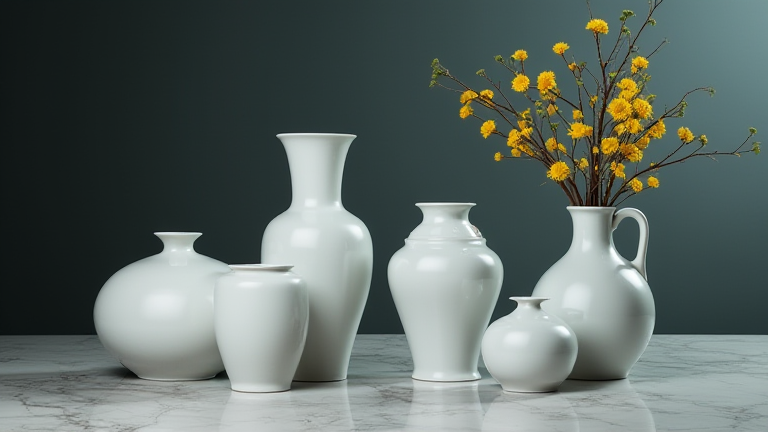
TL;DR: Digital technology is revolutionizing the porcelain vase market by integrating 3D printing for rapid prototyping and AI-driven demand forecasting for inventory management. These innovations allow manufacturers to offer hyper-personalized designs while drastically reducing waste and accelerating time-to-market for intricate ceramic pieces.
The Rise of Digital Precision in Ceramic Craft
For centuries, the creation of porcelain vases relied heavily on the artisan’s intuition and manual dexterity. Today, however, the intersection of digital fabrication and traditional ceramics is reshaping how these elegant objects are designed, produced, and sold. The latest developments focus on leveraging high-precision digital tools to enhance both the aesthetic complexity and the structural integrity of porcelain vases without compromising their handmade feel. Manufacturers are increasingly adopting hybrid workflows where digital files dictate the form, while human artisans handle the final glazing and finishing touches, ensuring that the soul of the craft remains intact.
If you want to dig deeper, check out our guide on Tech Meets Art: Smart Sensors for Modern Porcelain Vases.
Key Specifications and Technological Advancements
The core of this transformation lies in specific technological specifications that enable greater fidelity in porcelain production. High-resolution 3D scanning technology now allows designers to capture exact dimensions and surface textures of traditional masterpieces, creating digital twins that can be analyzed for stress points before any clay is even laid out. Furthermore, modern 3D printers capable of handling fine porcelain slurries offer layer heights as thin as 0.1 millimeters. This precision ensures that the delicate, translucent qualities of porcelain are preserved, a feat difficult to achieve with standard plaster mold casting. Additionally, Computer-Aided Design (CAD) software now includes specialized algorithms for ceramic shrinkage compensation. Since porcelain shrinks significantly during the firing process, these algorithms pre-adjust the digital model to account for this contraction, ensuring the final vase matches the intended dimensions with sub-millimeter accuracy.
Industry Impact and Market Dynamics
The impact on the industry is profound, shifting the market from a volume-based model to a customization-driven ecosystem. Digital tech has lowered the barrier to entry for small-batch production, allowing boutique studios to offer limited-edition vase collections that appeal to niche collectors. This agility reduces the financial risk associated with large inventory runs, which is crucial in a market where aesthetic trends can shift rapidly. Moreover, blockchain technology is beginning to find its way into the porcelain trade, providing provenance tracking for high-value, artist-signed vases. This digital certificate of authenticity helps combat counterfeits and adds a layer of trust for buyers in the secondary market. As a result, the average customer lifetime value is increasing, as buyers become more engaged with the story and technical journey behind each unique piece.
FAQ
Q: Does digital 3D printing replace traditional hand-thrown porcelain vases?
A: No, it complements them. Digital printing is used for complex, geometric designs that are impossible to throw on a wheel, while traditional methods remain preferred for organic, tactile pieces. The two methods are often combined in modern workflows.
Q: What is the primary benefit of using AI for inventory in the vase market?
A: AI analyzes historical sales data and current social media trends to predict demand for specific shapes and glaze colors. This helps manufacturers produce exactly what is likely to sell, reducing overstock and waste significantly.
Q: Are digitally designed porcelain vases more durable than traditional ones?
A: Yes, often. Digital simulation allows engineers to optimize the wall thickness of the vase, ensuring it is strong enough to withstand handling without being unnecessarily heavy. This results in a product that is both aesthetically delicate and structurally robust.
Leave a Reply