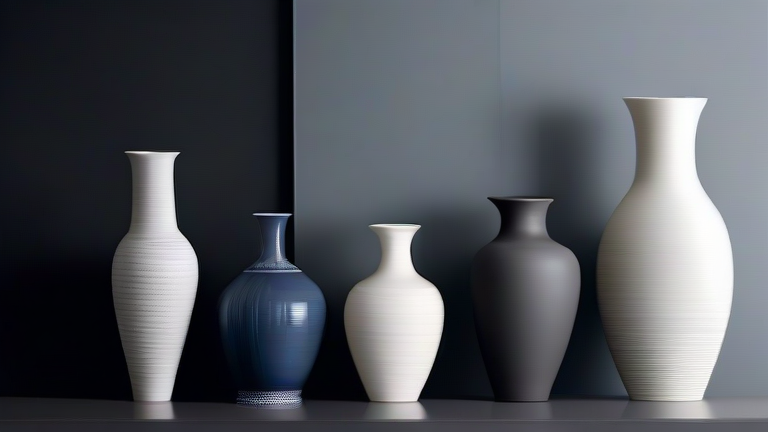
TL;DR: Elegant porcelain vases are the quiet luxury your home has been missing—they anchor a room with sculptural grace while doubling as functional art. By choosing pieces that echo your travel memories or cultural heritage, you transform a simple vessel into a storytelling centerpiece that elevates everyday living.
The Art of the Vessel: Why Porcelain Wins
Porcelain is not just ceramic; it is history fired at 1,300 degrees Celsius. Originating in China during the Tang dynasty and later coveted by European royals, porcelain vases carry a legacy of craftsmanship. Unlike glass or metal, their translucent, ivory-like finish catches light softly, creating a warm halo around any arrangement. In a world of mass-produced décor, a hand-thrown porcelain vase introduces intentional imperfection—a slight curve, a hand-painted cobalt bloom—that whispers of the artist’s hand. This tactile richness invites you to slow down, touch, and appreciate, turning a simple shelf into a personal gallery.
If you want to dig deeper, check out our guide on How Porcelain Vases Reduce Stress and Boost Home Wellness.
Travel-Inspired Styling: Bring the World Home
Your last trip to Kyoto, Marrakech, or the Amalfi Coast isn’t just a memory—it can be a décor principle. Use a tall, slender celadon vase to echo Japanese wabi-sabi aesthetics, pairing it with a single branch of cherry blossom or dried eucalyptus. For a Moroccan vibe, choose a vase with intricate geometric underglaze patterns and fill it with fragrant rose stems; the pattern itself becomes the focal point, not the flowers. The trick is to treat the vase as a souvenir of mood, not just a container. Place it on a console table near a window, where natural light amplifies its glaze, and let it remind you daily of that wind-swept market or serene temple garden.
Cultural Rituals: The Vase as a Daily Practice
Incorporating a porcelain vase into your routine is a form of mindfulness. The Japanese art of ikebana teaches that every stem has a direction; a vase is the anchor that respects that flow. Start each Sunday by trimming fresh herbs—rosemary, mint, or wildflowers—and arranging them in your vase. This small ritual grounds you, forcing you to notice texture, height, and negative space. Culturally, porcelain has long been a symbol of hospitality; in Chinese tradition, gifting a vase signifies peace and prosperity. By displaying one prominently, you invite that energy into your home—a silent welcome to guests and a daily reminder to yourself that beauty is worth preserving.
Personal Growth Through Curation
Choosing a porcelain vase is also a lesson in restraint. Instead of cluttering your space with dozens of trinkets, select one or two statement pieces that reflect your evolving taste. Perhaps a minimalist white vase from a local potter marks your commitment to supporting artisans, while a vintage blue-and-white piece passed down from a relative connects you to family roots. As you grow, your vase collection becomes a visual diary—each crack, glaze drip, or faded pattern tells a story of where you’ve been and what you value. This curation sharpens your eye for quality over quantity, a principle that spills into other areas of life, from wardrobe choices to time management.
Practical Elegance: Placement and Care
Don’t relegate vases to dusty corners. Use them as doorstops (filled with sand), as bookends on a shelf, or as standalone sculptures on a dining table. For a bold statement, cluster three vases of varying heights in a monochromatic palette—white, cream, and pale grey—on a sideboard. When it comes to care, dust gently with a soft brush, avoid harsh chemicals, and keep them away from direct afternoon sun to preserve the glaze. If using fresh flowers, change the water every two days to prevent staining the interior. With minimal effort, these vessels remain heirloom-quality for decades.
FAQ
Q: Are porcelain vases only for fresh flowers, or can I use them as standalone décor?
A: Absolutely standalone. Many porcelain vases are sculptural
Leave a Reply