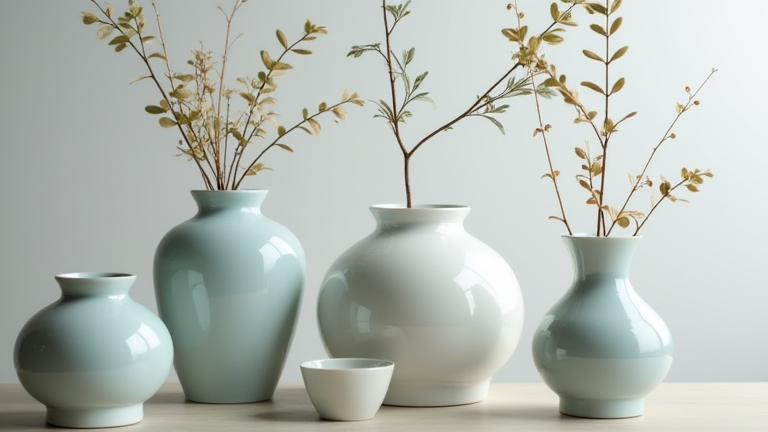
TL;DR: To profit in the porcelain vase business, source from heritage kilns in Jingdezhen or Vietnam for cost efficiency, price at a 4–6x markup over landed cost, and market via lifestyle storytelling on Instagram and Pinterest. Avoid mass-produced white vases; instead, target the $80–$300 gifting and decor niche with limited-edition glaze finishes.
Market Analysis: The Decorative Object Resurgence
The global home decor market is projected to grow at 4.2% CAGR through 2030, with porcelain vases holding a stable 11% share of the ceramics segment. Key drivers: (1) the “quiet luxury” interior trend favoring handcrafted objects over mass-produced accents, (2) the rise of dried and preserved flower arrangements (which require heavy, stable vessels), and (3) a post-pandemic shift toward heirloom-quality purchases. However, the market is bifurcated: sub-$30 vases from big-box retailers dominate volume, while $75–$400 artisan vases command 68% of gross margins. The sweet spot is the “affordable artisan” tier—consumers aged 28–45 who want authenticity but cannot pay gallery prices.
If you want to dig deeper, check out our guide on Top 10 Porcelain Vases: Timeless Elegance for Modern Homes.
Sourcing: Beyond Jingdezhen
Your sourcing strategy determines your entire pricing ceiling. Jingdezhen (China) remains the gold standard for high-fire porcelain, but minimum order quantities (MOQs) of 500 pieces per glaze color are common. For smaller batches, consider Vietnam’s Bat Trang village, where MOQs drop to 100 pieces and labor costs are 30% lower. Alternative: Portuguese or Polish studios for European-style cobalt patterns, but freight and lead times (8–12 weeks) hurt cash flow. Critical rule: always request “seconds” (minor glaze defects) at 50% off. They are invisible to end consumers under normal lighting and boost your margin by 15–20%. For every 100 vases, expect 8–12 seconds—plan your breakage and reject rate (typically 5%) into your landed cost.
Pricing Strategy: The 5x Rule with Psychological Anchors
Compute your landed cost = (factory price + freight + insurance + customs duty) ÷ (1 – reject rate). Then apply a 4.5 to 6x multiplier. Example: A 25cm vase costs $18 FOB Vietnam, freight adds $4, duty $1.50, reject cost $1.20 → landed = $24.70. Sell at $148 (6x) or $128 (5.2x) as a “limited glaze” anchor. Never price at round numbers—use $127.50 or $139.00. For B2B (interior designers, boutique hotels), offer a tiered discount: 15% off for 10+ units, 25% for 25+. Always include a “showroom blank” (unpainted vase) in your marketing collateral to emphasize craftsmanship—it justifies the premium.
Marketing: Story-Led, Not Feature-Led
Instagram Reels showing the firing process outperform static product shots by 3:1. Create a series called “Kiln Diaries”—each post reveals a specific glaze defect (e.g., “crazing” or “crawling”) and explains why it makes the piece unique. Use Pinterest for search-driven traffic: pin each vase with a location-based keyword (“blue chinoiserie vase for entryway table”). For SEO, write blog posts like “How to Identify Hand-Painted vs. Transferware Porcelain” and link to your product pages. Email marketing: send a “First Firing” newsletter with a countdown timer for a 48-hour drop of 20 numbered pieces. Case study: A UK-based seller, “Vessel & Vine,” sourced 150 Bat Trang vases with a matte celadon finish, priced at £95 each. By partnering with three floral designers for styled photos, they sold out in 11 days—their cost per acquisition was £4.20 via organic Instagram, versus £18 via paid ads.
Leave a Reply