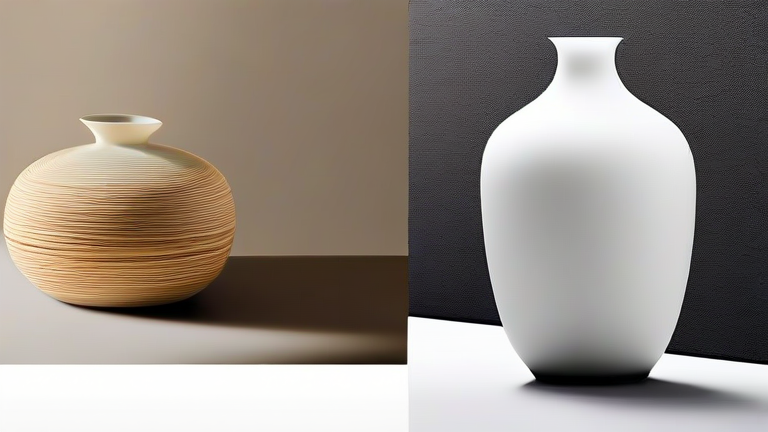
**“Smart Kilns & AI Glazes: Tech Reshaping Porcelain Vase Art”**
TL;DR: Smart kilns and AI-driven glaze formulations are revolutionizing porcelain vase production by ensuring precise thermal control and predictive aesthetic outcomes. This integration minimizes waste, enhances consistency, and allows artists to explore complex, data-driven designs that were previously impossible.
The Rise of Intelligent Firing
The traditional pottery kiln is undergoing a significant transformation. Modern smart kilns equipped with IoT sensors now monitor temperature, humidity, and atmospheric conditions in real-time. These systems use machine learning algorithms to adjust firing curves dynamically, preventing the thermal shock that often causes high-end porcelain vases to crack. For manufacturers, this means a drastic reduction in defect rates. The latest models feature 4K thermal imaging cameras that map heat distribution across the entire chamber, ensuring that every vase, regardless of its position, experiences uniform heating. This precision is critical for achieving the translucency and strength characteristic of fine porcelain. Furthermore, these kilns integrate with cloud platforms, allowing artisans to track firing history and optimize future cycles based on previous successes. The result is a more sustainable production process that consumes less energy while producing higher quality artifacts.
If you want to dig deeper, check out our guide on Handmade Porcelain Vases: 10 Timeless Designs for Your Home.
AI-Generated Glaze Formulations
Perhaps the most exciting development is in the realm of glaze chemistry. AI systems can now analyze thousands of historical glaze recipes to predict how specific mineral compositions will interact under varying thermal conditions. By inputting desired color tones, opacity levels, and texture profiles, artists can generate novel glaze formulas that balance aesthetic appeal with chemical stability. These AI-driven tools account for subtle variables such as kiln atmosphere and raw material impurities, which often lead to unpredictable results in manual trials. For porcelain vase creators, this opens up a vast landscape of new colors and finishes. The technology also enables “digital twin” simulations, where artists can virtually test glazes on 3D models of their vases before applying them physically. This pre-visualization capability saves time and materials, allowing for more creative experimentation without the financial risk of failed batches. The ability to customize glazes at a molecular level ensures that each vase can be unique while maintaining structural integrity.
Industry Impact and Future Prospects
The integration of these technologies is reshaping the porcelain industry’s competitive landscape. Small studios are adopting these tools to compete with mass production by offering highly customized, tech-enhanced pieces. Large manufacturers are leveraging data analytics to scale production while maintaining artisanal quality standards. The shift toward smart manufacturing is also driving sustainability goals, as precise control reduces energy waste and material scrap. As AI models become more sophisticated, we can expect even more intuitive interfaces that allow non-technical artists to harness complex data. The future of porcelain vase art lies in this synergy between human creativity and machine precision. By embracing these technologies, the industry is not just preserving traditional craft but elevating it to new heights of innovation and excellence. The convergence of art and technology is defining a new era in ceramic design.
FAQ
Q: How do smart kilns reduce energy consumption?
A: They use real-time sensor data to optimize heating cycles, preventing over-firing and ensuring efficient heat distribution throughout the chamber.
Q: Can AI replace the artistic intuition of a potter?
A: No, AI acts as a tool to enhance creativity by predicting outcomes and generating options, but the final design choices remain in the hands of the human artist.
Q: Are these technologies affordable for small studios?
A: While initial costs are high, cloud-based AI glaze tools and modular smart kiln upgrades are becoming more accessible, lowering the barrier to entry for smaller operations.
Leave a Reply