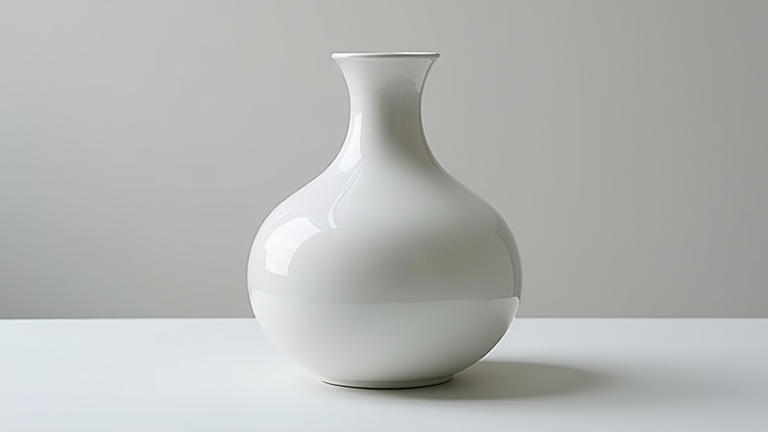
3D Printing Meets Porcelain: The Future of Vase Tech
TL;DR: 3D printing has revolutionized porcelain vase manufacturing by enabling complex, custom geometries that are impossible to achieve through traditional wheel throwing. This technology drastically reduces waste and allows for rapid prototyping, fundamentally shifting the ceramic industry from mass production to personalized, on-demand creation.
The Technological Leap in Ceramic Fabrication
The convergence of additive manufacturing and ancient ceramic arts has resulted in a new era of vase design. Traditional porcelain production relies heavily on human dexterity and time-consuming kiln schedules, limiting design possibilities to what can be thrown or carved. Recent developments in binder jetting and extrusion-based 3D printing have broken these constraints. Manufacturers are now using specialized ceramic inks composed of fine porcelain powder mixed with organic binders. These inks are deposited layer by layer with micrometer precision, allowing for intricate lattice structures, hollow interiors, and organic curves that defy conventional manufacturing limits. This shift is not merely about speed; it is about expanding the vocabulary of form available to artists and designers.
If you want to dig deeper, check out our guide on 10 Minimalist Wardrobe Essentials for Men Who Hate Clothes S.
Key Specifications and Material Innovations
The latest porcelain 3D printers feature build volumes exceeding 300mm in height, accommodating large-scale statement vases. A critical specification is the green density of the printed body, which now reaches over 65% before sintering. High-quality ceramic inks contain less than 10% organic binder, ensuring minimal shrinkage during the debinding and firing stages. Modern systems utilize UV-curable or thermal-crosslinking binders that provide sufficient green strength to handle the vase without support structures. The sintering process, typically occurring at 1,300°C to 1,400°C, results in a vitrified porcelain surface with water absorption rates below 0.5%. This ensures the vases are not only aesthetically pleasing but also functionally robust, capable of withstanding daily use in domestic and commercial settings. Advanced thermal management systems in these printers prevent warping, ensuring dimensional accuracy within ±0.1mm.
Industry Impact and Market Shifts
This technology is disrupting the luxury home goods market by enabling mass customization. Brands can now offer customers unique vase designs printed on demand, reducing inventory costs and environmental waste. The industry impact extends to sustainability, as digital fabrication allows for precise material usage, eliminating the off-cuts and breakages common in traditional pottery. Furthermore, 3D printing facilitates the creation of complex internal structures that enhance structural integrity while minimizing material weight. This efficiency is particularly valuable for shipping large, fragile items. As the technology matures, we expect to see further integration with AI-driven design tools, where algorithms optimize vase shapes for both aesthetic appeal and structural stability, creating a seamless loop between digital design and physical porcelain objects.
FAQ
Q: Is 3D printed porcelain as strong as traditionally made porcelain?
A: Yes, modern 3D printed porcelain achieves comparable compressive strength and durability when properly sintered, though surface finishing may require additional polishing.
Q: Can 3D printers create hollow vases without support structures?
A: Yes, advanced slicing software allows for the printing of hollow geometries, and improved ink rheology enables overhangs and internal cavities without external support materials.
Q: What is the primary cost driver in 3D printed vase production?
A: The main costs are the high-precision ceramic ink and the energy-intensive sintering process, though these are offset by reduced labor and material waste.
Leave a Reply