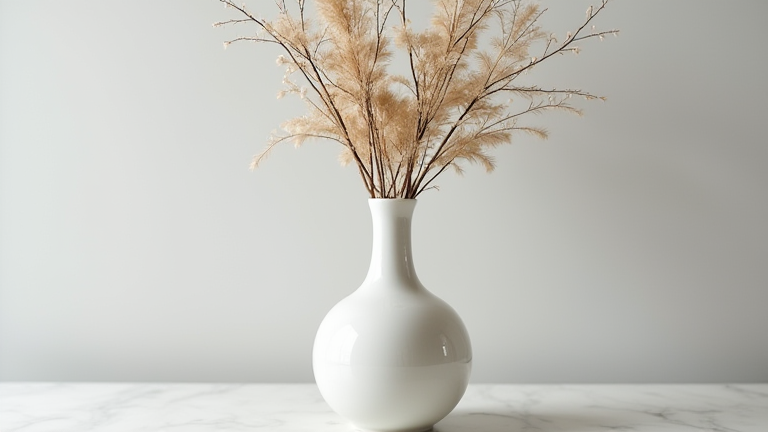
TL;DR: To care for porcelain vases, use lukewarm water, mild dish soap, and a soft microfiber cloth—never abrasive scrubbers. For stubborn stains, soak with a baking soda paste, then rinse and air-dry upside down to prevent water spots.
Step 1: Gather Your Supplies
You will need: lukewarm water, pH-neutral dish soap, a soft microfiber cloth, a long-handled bottle brush (or a flexible pipe cleaner), white vinegar, baking soda, and a towel. Avoid steel wool, harsh chemical cleaners, or anything with ammonia—these can etch the glaze and dull the porcelain’s finish.
If you want to dig deeper, check out our guide on Porcelain Vases & Health: Do They Release Toxins?.
Step 2: Empty and Dust the Vase
Remove any flowers, water, or decorative filler. Use a dry, soft brush or a can of compressed air to gently dislodge loose dust from the interior and exterior. Do not use a feather duster, as it can scratch the surface. If the vase has a narrow neck, wrap a small piece of microfiber around a chopstick to reach inside.
Step 3: Hand-Wash with Mild Soap
Fill a plastic basin (never a metal sink, which can chip porcelain) with lukewarm water and add 2–3 drops of dish soap. Submerge the vase and gently wipe the exterior with a microfiber cloth, working in circular motions. For the interior, dip the bottle brush in soapy water and twist it slowly to loosen residue. Do not soak for more than 5 minutes—prolonged water exposure can weaken any hairline cracks.
Step 4: Remove Stubborn Stains (Tannin or Mineral Deposits)
For brown tea or coffee rings inside the vase, make a paste of 3 parts baking soda to 1 part water. Apply it with a soft sponge, let sit for 10 minutes, then scrub gently with the bottle brush. For white mineral scale (hard water), fill the vase with equal parts white vinegar and lukewarm water—let it sit for 30 minutes, then rinse thoroughly. Never boil water in porcelain, and never use bleach.
Step 5: Rinse and Dry Properly
Rinse the vase under lukewarm running water, tilting it to ensure all soap and paste is gone. Shake out excess water, then place the vase upside down on a folded towel to drain for 15 minutes. After that, use a fresh dry microfiber cloth to polish the exterior. For the interior, insert a rolled-up paper towel to absorb remaining moisture, then leave it in a well-ventilated area for 24 hours before storing.
Step 6: Prevent Future Damage
When displaying, add a thin felt pad under the base to prevent scratches. Do not place porcelain vases in direct sunlight or near heat vents—temperature swings can cause crazing (tiny cracks in the glaze). If you use the vase for fresh flowers, change the water every two days and clean immediately after removing the stems, as pollen and sap can etch the surface.
FAQ
Q: Can I put a porcelain vase in the dishwasher?
A: No. Dishwasher detergents are too abrasive, and the heat can cause thermal shock, leading to cracks or crazing. Always hand-wash porcelain.
Q: How do I remove sticky adhesive residue from a price label?
A: Dab a cotton ball with a little rubbing alcohol (70% is fine) and gently rub the spot in a circular motion. Rinse immediately with soapy water and dry. Do not use a razor blade.
Q: Is it safe to use vinegar on gold-trimmed porcelain?
A: No. Vinegar and acids can strip metallic luster. For gold-trimmed vases, use only the mild soap method and skip the vinegar soak—use a baking soda paste instead for stains.
Leave a Reply